

Rescatar sabores en FP
Presentación del proyecto
El proyecto <strong>Raízes: Rescatar sabores desde FP</strong> está impulsado desde el Centro de Innovación para la Formación Profesional de Aragón (CIFPA) dentro de la convocatoria del Departamento de Educación para la realización de proyectos de innovación aplicada y transferencia del conocimiento en la Formación Profesional, del sistema educativo en centros públicos de la Comunidad Autónoma de Aragón.
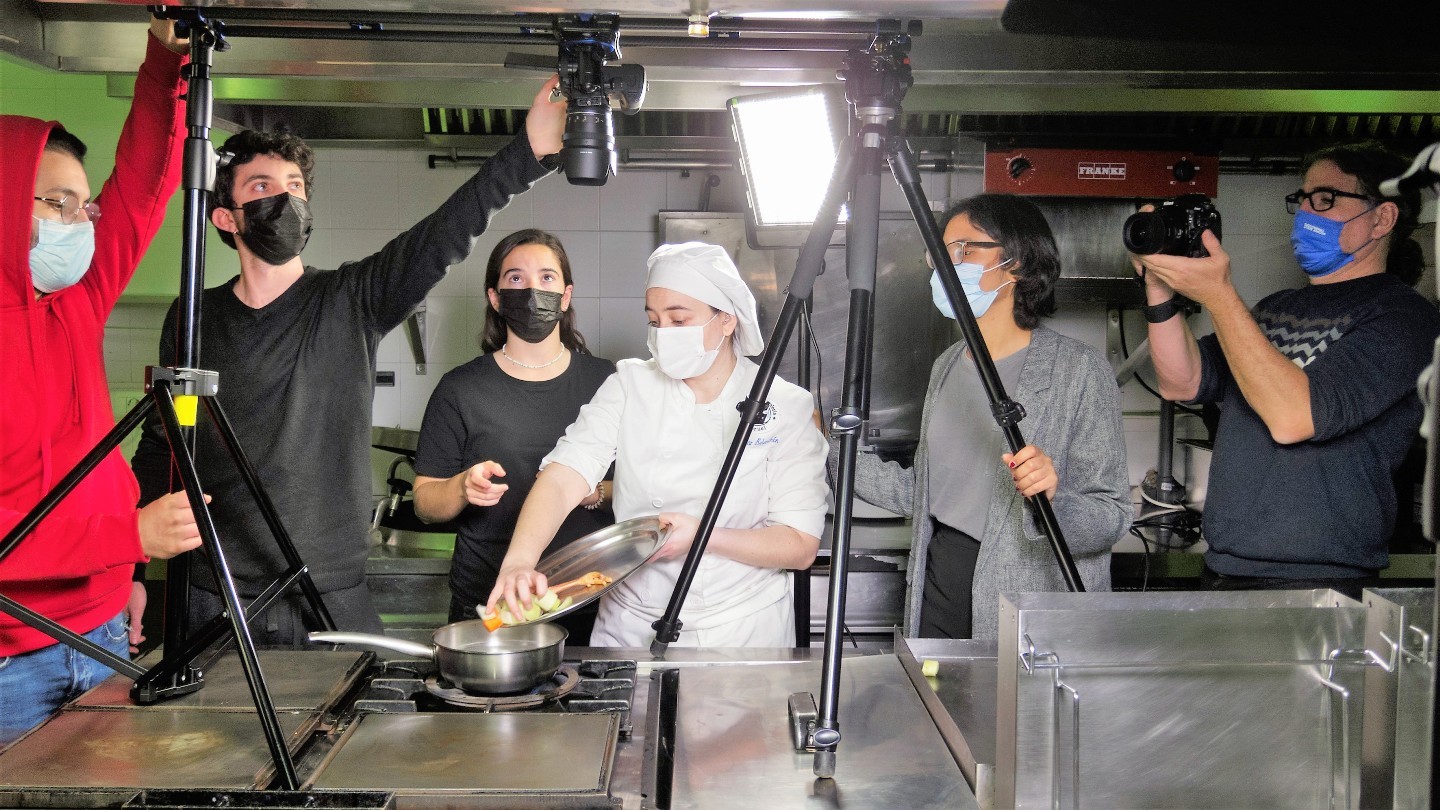
<strong>Raízes: Rescatar sabores desde FP</strong> tiene como semilla la labor de recuperación de especies animales y vegetales que realizan los centros públicos de Formación Profesional de Agraria (CPIFP San Blas, CPIFP Movera y CPIFP Montearagón) con el Centro de Investigación y Tecnología Agroalimentaria de Aragón (CITA). Con el objetivo de ir un paso más allá se unen a esta iniciativa la Escuela de Hostelería y Turismo de Teruel, que se encarga del diseño y el cocinado de las recetas, y los IES Martínez Vargas y Pilar Lorengar que se centran en todo lo relacionado con el audiovisual, diseño gráfico y publicaciones con el objetivo de difundir los resultados del proyecto.
El objetivo general es realizar un producto final, bloc y videos de recetas, que muestre propuestas de cocina tradicional e innovadora y que el protagonismo lo tenga el producto “recuperado”.
El proyecto se inicia, en el curso 2021-22, con un producto muy arraigado a la provincia de Teruel: la gallina serrana. Continúa con el bróquil y la judía blanca de Muniesa y finaliza, en el curso 2023-24, con el cerdo.
Centros y colaboradores participantes
<strong>Familia profesional de Agraria</strong>
CPIFP San Blas (Teruel), CPIFP Movera (Zaragoza) y CPIFP Montearagón (Huesca)
- Grado Medio de Producción Agropecuaria
- Grado Superior de Ganadería y Asistencia
- Grado Superior de Paisajismo y Medio Rural
<strong>Familia profesional de Hostelería</strong>
CPIFP Escuela de Hostelería y Turismo (Teruel)
- Grado Medio de Cocina y Gastronomía
- Grado Superior de Dirección de Cocina
<strong>Familia profesional de Artes Gráficas</strong>
IES Pilar Lorengar (Zaragoza)
- FP Básica de Artes Gráficas
- Grado Medio de Impresión Gráfica
- Grado Medio Preimpresión Digital
<strong>Familia profesional de Imagen y Sonido</strong>
IES Martínez Vargas (Barbastro)
- Grado Superior de Realización de Proyectos Audiovisuales y Espectáculos
<strong>Centro de Investigación y Tecnología Agroalimentaria de Aragón (CITA)</strong>
<strong>Alberto Caracciolo</strong>. Alumno del Máster en Composición Musical y autor de la banda sonora de los vídeos de las recetas
Resultados 2023-2024: recetas de matacía o matacerdo
En el tercer año de proyecto, las recetas se centran en <strong>la matacía o matacerdo</strong>, que es una actividad de larga tradición en todo el territorio aragonés. Como en años anteriores, en el proyecto colabora alumnado de agraria, hostelería, artes gráficas e imagen y sonido.
La matanza del cerdo era un acto social, motivo de fiesta y reunión. Antiguamente, a lo largo del invierno, se sacrificaban los cerdos que se habían engordado durante todo el año, principalmente con desechos del huerto y desperdicios de comida de la casa. Con el mondongo se obtenían alimentos contundentes que ayudaban a pasar los meses más fríos, pero también, gracias a las conservas, parte del verano.
Con el paso del tiempo, esta actividad doméstica se ha ido abandonando tanto por temas prácticos como por los requisitos marcados por la normativa sanitaria vigente. En la actualidad se celebran fiestas populares para rememora la tradicional matacía del cerdo como es el caso de la Festa del Tossino de Albelda en Huesca.
<strong>Bloc de recetas (2021 – 2024)</strong>

Resultados 2022-2023: recetas con judía de Muniesa y bróquil
En su segundo año, el proyecto continua con dos productos de cercanía recuperados en los centros de Agraria: <strong>el bróquil y la judía blanca de Muniesa</strong>. Al igual que en el curso 2021-2022, colabora alumnado de agraria, hostelería, artes gráficas e imagen y sonido.
<strong>El bróquil</strong> es una verdura típica de invierno, su cultivo es tradicional en algunas comarcas de la provincia de Huesca. El aprovechamiento suele hacerse para autoconsumo y para el suministro de mercados de proximidad. Es necesario dar a conocer el bróquil y los beneficios de consumirlo para fomentar su cultivo y que no se pierda su potencial genético.
<strong>La judía de Muniesa</strong> es un cultivo tradicional de la localidad turolense de Muniesa, en la Comarca de las Cuencas Mineras. Es una judía blanca de forma arriñonada y tamaño pequeño para consumo del grano seco, de reconocida calidad organoléptica en la zona. En el análisis organoléptico se valora positivamente que tiene la piel muy fina y la textura es mantecosa y de consistencia blanda. Además, desde el punto de vista nutricional es una excelente fuente de proteína vegetal (contenidos del 18 al 28% de proteínas).
Resultados 2021-2022: recetas con gallina serrana
El proyecto se inicia con un producto muy arraigado a la provincia de Teruel: <strong>la gallina serrana</strong>. Se continúa con otros productos de cercanía recuperados en los centros de Agraria. Colabora alumnado de agraria, hostelería, artes gráficas e imagen y sonido.
<strong>La gallina serrana de Teruel</strong> es una raza que en los últimos años ha sufrido un grave retroceso a causa de la incorporación en las explotaciones avícolas, para la cría y la puesta de huevos, de gallinas híbridas que son más ponedoras.
Esta especie se caracteriza por ser una raza rústica, adaptada a las difíciles condiciones climatológicas propias de la provincia de Teruel, y procedente de un entorno campero, de masadas turolenses, en el que está acostumbrada a buscar su alimento. Es una gallina semipesada de tipo mediterráneo, que tiene una doble aptitud tanto de puesta como de carne. Los huevos son de color crema con distintas tonalidades, con un peso de 65 g y cuya producción anual es de más de 150 huevos por gallina. El peso de estos animales se encuentra entre los 3,2-3,5 kg en el macho y 2,2-2,5 kg en la hembra.